
Connecticut LLC guide
How to Start an LLC in Connecticut
To start an LLC in Connecticut, confirm your name is available, appoint a qualified registered agent, file Certificate of Organization with Connecticut Secretary of the State, and finish the operating, tax, banking, licensing, and compliance work that makes the company usable.
 Written bySarah MitchellPolicy Analyst
 Reviewed by Melissa GrantUpdated 2026-08-03
Overview
Connecticut LLC formation at a glance
A limited liability company is created at the state level. For Connecticut, that means filing Certificate of Organization with Connecticut Secretary of the State, maintaining a registered agent, and keeping the LLC's records separate from the owner's personal life. The filing creates the legal entity, but it does not automatically handle taxes, local permits, contracts, insurance, bookkeeping, or bank accounts.
Use this guide as a planning checklist for cost, registered agents, filing steps, operating agreements, taxes, licensing, and ongoing compliance. Before filing or paying a fee, verify current requirements with the official filing office.
Quick answer
Starting an LLC in Connecticut: short answer
To start an LLC in Connecticut, choose a distinguishable name, appoint a qualified registered agent, file Certificate of Organization with Connecticut Secretary of the State, then complete the operating agreement, EIN, banking, license, tax, and annual report work that keeps the company usable.
- Filing office
- Connecticut Secretary of the State
- Formation document
- Certificate of Organization
- Registered agent
- Use a registered agent who can reliably receive service in Connecticut.
- Recurring item
- annual report
State context
Connecticut LLC cost and business activity context
Connecticut's minimum formation filing of $120 is above the state-level median of $100. Connecticut recorded 49,834 business applications in 2025, or 13.5 per 1,000 residents. That places it #35 among state-level jurisdictions and below the U.S. pace of 16.6. The state's estimated population grew by 0.4% from 2024 to 3,688,496.
Monthly trend
Business applications in 2025
Peak month Apr
National benchmark
How Connecticut compares
Sources: U.S. Census Bureau Business Formation Statistics and Vintage 2025 population estimates. Business applications are EIN applications, not a count of LLC formations.
State evidence
The official Connecticut filing record, not a generic state template
Each claim below opens the government page or form that supports it. Check the live source before filing, because fees, queues, and agency procedures can change.
Sources checked 2026-08-03
How the filing actually works
Submission routes, payment mechanics, published timing, and expedite details.
Online, paper, payment, and timing
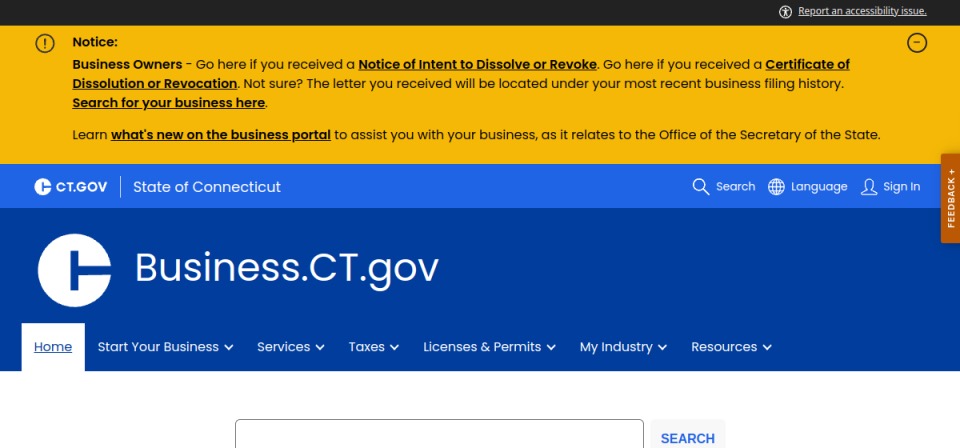
Connecticut supports online registration through Business.CT.gov and publishes a fillable Certificate of Organization with mailing and delivery addresses. Online payments use major credit cards; filing policies describe expedited handling and paper-payment requirements.
CT formation instructionsRules that are specific to Connecticut
Reports, taxes, publication, professional restrictions, series rules, and other state-only details.
Annual report due each year
The first LLC annual report is due in the year after formation. Connecticut requires annual reports online and lists the current LLC report fee on its domestic-report page.
CT recurring filing guidanceRegistered-agent details are closely validated
Connecticut collects the agent's contact and address information and may issue an Agent Information Insufficient notification when the record does not meet filing requirements.
CT official guidanceFixes, closure, local approvals, and help
Use the exact state or city route instead of trying to repair an entity record from a formation screen.
Fix, dissolve, or restore the record
The domestic LLC forms page links amendment, correction, dissolution, and reinstatement filings and identifies which submissions are online or paper.
CT entity formsHartford licenses and permits
Businesses located in Hartford should use the city's licenses and permits directory for local approvals tied to the business activity.
Hartford licenses and permits official portalWhat commonly causes rejection in CT
An agent record without the required acceptance or contact information, an unavailable name, incomplete principal details, or a payment problem can hold the filing.
CT formation instructionsConnecticut Secretary of the State
860-509-6003Verify contact detailsFiling help
Want help filing your Connecticut LLC?
Compare LLC services by state-fee handling, registered agent support, documents, reminders, and renewal risk before you pay.
Step-by-step
How to start a Connecticut LLC
- Choose the right formation state.
Most owners form where the business actually operates. If you form in Connecticut but operate somewhere else, or form elsewhere but operate in Connecticut, foreign LLC registration may be required. This matters because foreign registration can create a second registered-agent relationship, a second annual report calendar, and additional state tax accounts.
- Search and prepare your business name.
Search Business.CT.gov before committing to a name. Avoid names that imply a regulated service unless you have the required approval. Check spelling, punctuation, plural forms, and similar existing names before ordering a logo, domain, storefront sign, or printed materials.
- Appoint a registered agent.
Use a registered agent who can reliably receive service in Connecticut. This is the address where legal notices and state mail can be delivered. The agent should be reliable during business hours and should have a process for forwarding documents quickly.
- File Certificate of Organization.
Submit the formation filing to Connecticut Secretary of the State. Review every address, organizer name, management choice, and effective date before paying the state filing fee. Save the filing receipt, entity number, and approved document in a permanent company folder.
- Build the internal company file.
Save the stamped approval, prepare an operating agreement, document ownership percentages, and keep member or manager approvals with the LLC records.
- Finish tax, banking, and licensing setup.
Get an EIN when needed, open a dedicated bank account, register for applicable state taxes, and verify local permits before taking customers. If you will hire workers, sell taxable products, rent a physical location, or operate in a regulated industry, treat licensing as part of launch rather than a later chore.
Name search
Connecticut LLC name requirements
The name stage is where many avoidable rejections begin. Your LLC name should be legally acceptable, distinguishable in state records, usable in the real market, and consistent across your formation filing, EIN application, bank account, contracts, website, and licenses.
Search Business.CT.gov before committing to a name. Before filing, search the official state database, check common spelling variants, look for similar businesses in your industry, and confirm whether the matching domain and social handles are available.
Use the LLC name search guide for the national checklist, then confirm the final result with Connecticut Secretary of the State.
How to check whether your LLC name is available
- Includes an accepted LLC designator
- Does not imply a government agency or restricted profession
- Is distinguishable from existing state records
- Matches the brand, domain, and customer-facing name
- DBA or trade-name filing considered if needed
Cost
How much a Connecticut LLC costs
The mandatory state formation cost starts at $120. After approval, the calculator annualizes $80 annual report so you can compare Connecticut against other states on the same timeline. Optional services, local licenses, taxes, and expedited filing can still change the total.
State formation filing
State filing fee for a Certificate of Organization.
Ongoing state compliance
Annual report fee.
Other costs to plan for
Local licenses and tax registrations are separate from entity formation.
Fee table
Common Connecticut LLC cost line items
Use this as a planning table, then verify the current government fee and any optional service charge before checkout.
| Cost item | Typical amount | What it covers |
|---|---|---|
| Formation filing | $120 | State filing fee for a Certificate of Organization. |
| Recurring state obligation | $80 annual report | Annual report fee. |
| Registered agent service | $0 if self-served; commonly $100-$300/year commercially | Use a registered agent who can reliably receive service in Connecticut. |
| Name reservation | Optional when available | Reserve only if you need to hold the name before filing. |
| Expedited processing | Varies by state filing office | Check the official filing portal before paying for speed. |
| Licenses and tax registrations | Separate from LLC formation | State, city, county, sales-tax, payroll, and professional-license costs depend on the business. |
Formation filing plus one annualized year of standard state recurring obligations. Excludes optional providers, local licenses, insurance, tax advice, and expedited handling.
Formation filing plus three annualized years of standard state recurring obligations. Biennial fees are annualized for comparison.
The provider tool below adds Connecticut filing fees to documented service fees, practical packages, registered-agent renewals, EIN help, and operating-agreement costs where the data supports it.
Fee benchmark
How Connecticut compares
Official state source record checked 2026-08-03. Fees and tax rules can change. Confirm the current amount with Connecticut Secretary of the State before filing or paying.
Checkout math
Compare the same basket before buying
State fees, registered agent renewals, EIN help, documents, and compliance subscriptions can change the real first-year cost.
Processing time
How long does it take to form an LLC in Connecticut?
Processing time depends on Connecticut Secretary of the State, filing method, current workload, corrections, and whether expedited handling is available.
A formation service can prepare and submit paperwork, but it usually cannot override the state filing office's queue. Compare provider preparation speed with the official state processing time before paying for expedited service.
For broader timing context, use the LLC formation timeline guide and then verify current CT timing with Connecticut Secretary of the State.
Connecticut filing speed checklist
- Online filing time checked against the state portal
- Mail filing time and payment method understood
- Expedited availability and fee verified before checkout
- Provider preparation time separated from state approval time
- Correction or rejection process understood before launch deadlines
Service picks
Best LLC services to compare for Connecticut
These recommendations are not one-size-fits-all. They highlight services that may fit common Connecticut LLC situations: low first-year cost, registered agent support, privacy, reminders, or complex compliance needs.
 Best Overall
ZenBusiness
Dashboard, compliance tools, and beginner-friendly workflow
- Best for
- Overall value
- Watch
- Some important services are paid add-ons
 Best for Privacy
Northwest Registered Agent
Privacy-focused registered agent support
- Best for
- Privacy and support
- Watch
- Not always the cheapest advertised entry point
 Best Legal Brand
LegalZoom
Large legal services platform with broad add-ons
- Best for
- Brand recognition
- Watch
- Can cost more after add-ons
Cost preview
Compare LLC service costs for Connecticut
Pick a provider to preview the Connecticut filing fee, provider fee, package tier, add-ons, renewal notes, and first-year estimate before you leave for checkout.
ZenBusiness
Dashboard, compliance tools, and beginner-friendly workflow
- $0 Starter
- $199 Pro
- $399 Premium, plus state fees
- Included in higher package or paid add-on
- Included in higher package or paid add-on
- Paid add-on
- verify renewal before checkout
State fee data reviewed ; provider pricing reviewed . Minimum mode uses ZenBusiness Starter. Practical mode uses Pro because many founders need EIN or operating-agreement help that is not part of the bare filing.
Visit ZenBusinessBefore filing
Get these details ready before starting the Connecticut filing
Confirm the LLC name is distinguishable and uses an accepted Connecticut LLC designator.
Choose a registered agent that meets Connecticut requirements.
Gather the information needed for Certificate of Organization, including addresses, organizer details, and management choice.
Prepare a payment method and save the receipt, confirmation, and approved filing.
Registered agent
Choosing a Connecticut registered agent
A registered agent is not just a mailbox. The role exists so courts, agencies, and other parties have a reliable way to deliver legal notices to the LLC. Use a registered agent who can reliably receive service in Connecticut.
If you use your own address, consider privacy, availability during business hours, and what happens when you move. If you use a commercial service, compare renewal pricing, document scanning, cancellation rules, and whether the service supports foreign registrations in other states.
See the dedicated Connecticut registered agent guide for state-specific agent tradeoffs, or compare national options in the registered agent services hub.
Agent checklist
- Physical address in Connecticut
- Reliable document forwarding
- Clear renewal pricing
- Privacy expectations understood
- Process for changing agents later
Agent services
Need registered agent coverage instead of self-service?
Compare providers by renewal price, legal-mail handling, privacy workflow, state coverage, and cancellation terms.
Formation filing
What you usually need before filing Certificate of Organization
Exact forms vary by state, but most LLC filings ask for a core set of information. Gather this before you start the online form so you are not making decisions under time pressure.
Company information
- Legal LLC name and designator
- Principal office or mailing address
- Business purpose if the form asks for it
- Effective date, if delayed filing is allowed
People and authority
- Organizer name and signature
- Registered agent name and address
- Member-managed or manager-managed choice
- Initial members or managers if requested
Records to save
- Stamped or approved formation document
- Payment receipt and entity ID
- State account login information
- Any confirmation emails or rejection notices
Management
Member-managed vs. manager-managed
Many LLC filings ask whether the company will be managed by its members or by one or more managers. A member-managed LLC is usually the simplest structure for owner-operated businesses because the owners run day-to-day decisions directly.
A manager-managed LLC can make sense when some owners are passive investors, when a non-owner will run operations, or when the operating agreement needs a clearer chain of authority. Your formation filing and operating agreement should match.
Member-managed
Owners manage daily operations and usually have direct authority to act for the LLC.
Manager-managed
Designated managers handle operations while members keep higher-level ownership rights.
Taxes and licenses
Federal, state, and local setup after filing
EIN and IRS records
The IRS provides EINs directly, and the IRS says to form the legal entity with the state before applying for an EIN. Many LLCs need an EIN for banking, hiring, multi-member tax reporting, or state tax accounts.
IRS EIN informationLicenses and permits
Formation approval does not replace business licenses. Use state, county, and city resources to check permits for contractors, food businesses, professional services, retail sellers, home-based businesses, and regulated trades.
SBA business guideFederal BOI note
FinCEN changed BOI reporting rules in 2025. U.S.-formed companies and U.S. persons were removed from the federal BOI reporting requirement under FinCEN's interim final rule, while certain foreign entities registered to do business in the United States may still need to review BOI obligations.
FinCEN BOI updatesConnecticut details
What to watch in Connecticut
Some Connecticut businesses need tax registration or industry licenses before opening.
The details that matter most after formation are registered agent reliability, recordkeeping, ongoing reports, tax setup, license renewals, and direct access to the government filing office.
Maintenance note
Annual reports are the recurring compliance task to calendar.
Do not rely on memory for state compliance. Add due dates to a calendar owned by the business, and keep login credentials with the company records.
Filing questions
Answers to verify before filing in Connecticut
What recurring filing should I calendar?
annual report
CT recurring filing guidance ->When were official state sources checked?
2026-08-03
Questions this guide answers
Common Connecticut LLC questions
Use these short answers to connect the filing step with registered-agent, post-approval, and service decisions.
File Certificate of Organization with Connecticut Secretary of the State.
Use a registered agent who can reliably receive service in Connecticut.
Open related guideCreate records, apply for an EIN when needed, open banking, check licenses, and calendar compliance.
Open related guideUse a service for guided filing and reminders; file directly if you are comfortable with state instructions and tracking deadlines.
Open related guideAfter approval
Turn the approved LLC into a usable business
Maintenance
How to keep your Connecticut LLC in good standing
Formation creates the LLC, but maintenance keeps it alive. Your recurring state item is generally described as annual report. In addition, update your registered agent and address when they change, keep licenses active, and respond quickly to tax or state notices.
Annual or biennial filings are usually not financial statements. They commonly update the state on the LLC's name, principal address, registered agent, and sometimes member or manager information.
Compliance rhythm
- Save the approved formation document.
- Create the operating agreement and ownership records.
- Open tax, license, and bank accounts.
- Add annual report to a shared calendar.
- Review records before every renewal period.
Official office
Where to verify Connecticut LLC requirements
Use this guide to plan the work, but use Connecticut Secretary of the State to verify the current form, fee, filing method, processing time, name availability rules, and compliance deadlines. State pages and PDFs can change faster than third-party guides.
Connecticut Secretary of the State
Official filing office for Connecticut LLC formation and public business records.
Visit official CT filing sitePrimary sources
Official sources used for this Connecticut guide
Source pages, forms, fees, and processing instructions can change. Open the official links below before submitting a filing or relying on a deadline.
Sources checked 2026-08-03
- Business.CT.govGovernment source for a filing path, state rule, lifecycle filing, local license, or contact detail cited above.
- CT formation instructionsGovernment source for a filing path, state rule, lifecycle filing, local license, or contact detail cited above.
- CT recurring filing guidanceGovernment source for a filing path, state rule, lifecycle filing, local license, or contact detail cited above.
- CT official guidanceGovernment source for a filing path, state rule, lifecycle filing, local license, or contact detail cited above.
- Hartford licenses and permits official portalGovernment source for a filing path, state rule, lifecycle filing, local license, or contact detail cited above.
- CT business filing contactGovernment source for a filing path, state rule, lifecycle filing, local license, or contact detail cited above.
Before you decide
Connecticut LLC caveats to keep straight
The state LLC filing creates the entity, but industry, city, county, tax, and zoning approvals may still apply.
Verify the current Connecticut filing fee, processing time, and annual report rules with Connecticut Secretary of the State.
If you form away from the operating state, foreign registration, extra registered agents, and second-state fees may apply.
Mistakes to avoid
Common Connecticut LLC formation mistakes
Most LLC problems come from treating formation as a one-time form instead of a system. A better launch has state approval, clean records, separate finances, tax setup, licensing, insurance, and repeatable compliance habits.
Choosing a state for the headline
Check whether operating elsewhere still creates foreign-registration costs and a second compliance calendar.
Using an unreliable registered agent
Choose an agent who is consistently available and has a clear process for forwarding legal notices quickly.
Skipping the operating agreement
Keep one even for a single-member LLC so ownership, authority, and company records are documented.
Mixing personal and business money
Open a dedicated bank account and record contributions, draws, reimbursements, and company expenses clearly.
Missing recurring deadlines
Add annual report and local license renewals to a calendar owned by the business.
Assuming an LLC automatically saves tax
Separate the legal-entity decision from tax treatment and review elections with a qualified tax professional.
Next decisions
Useful next reads for a Connecticut LLC
CT FAQ
Connecticut LLC questions
How much does it cost to start an LLC in Connecticut?
The total cost usually includes the state filing fee for Certificate of Organization, registered agent costs if you hire a service, local business licenses, optional name reservation or certified copies, and ongoing items such as annual report. Always confirm the current filing fee with Connecticut Secretary of the State before you file or pay.
What document forms an LLC in Connecticut?
Connecticut uses Certificate of Organization. File it with Connecticut Secretary of the State and save the approved copy for your records.
Do I need a registered agent in Connecticut?
Use a registered agent who can reliably receive service in Connecticut.
What should I do after my Connecticut LLC is approved?
Create an operating agreement, handle EIN and banking needs, review licenses, and calendar annual report.
Can I form a Connecticut LLC if I live in another state?
Usually yes, but you still need a valid registered agent in Connecticut. If the business actually operates in another state, you may also need foreign LLC registration and compliance there.
Should I use an LLC formation service for Connecticut?
A service can help with filing, reminders, and registered agent coverage. Filing yourself may be enough for a simple single-member LLC if you are comfortable reading the state instructions and tracking deadlines.
Does a Connecticut LLC need an EIN?
Many LLCs need an EIN for banking, hiring, tax accounts, or multi-member tax reporting. The IRS says to form the legal entity with the state before applying for an EIN.
How long does it take to form a Connecticut LLC?
Processing time depends on Connecticut Secretary of the State, filing method, workload, and whether expedited options are available. Online filings are often faster than mailed filings, but always check the official filing office for current turnaround times.
Do I need a DBA for my Connecticut LLC?
You only need a DBA, trade name, assumed name, or fictitious name if the business will operate publicly under a name different from its legal LLC name. DBA rules are often handled separately from LLC formation and may involve state, county, or local filings.
Formation planning
Plan the rest of your Connecticut LLC setup
Use these guides to connect state filing requirements with service choice, cost planning, registered agent decisions, and post-approval tasks.
Model Connecticut filing fees with service fees, registered agent costs, and add-ons.
Filing routeLLC Service vs. DIY Filing: Which Path Should You Choose?Compare LLC formation services against direct state filing by cost, speed, registered agent needs, documents, support, and renewal risk.
After approvalWhat to Do After Forming an LLC: 12 Essential StepsUse this post-formation LLC checklist for EINs, banking, agreements, taxes, licenses, insurance, contracts, and compliance.
Best servicesBest LLC Services With Registered AgentRegistered agent value depends on address privacy, document forwarding, renewal price, cancellation rules, and whether multi-state coverage is available.
Best servicesBest Cheap LLC ServicesCheap LLC services can work well when you separate the advertised service fee from state fees, registered agent renewal, EIN add-ons, and compliance subscriptions.
Privacy reviewNorthwest Registered Agent reviewPrivacy-focused registered agent support. Compare pricing, registered agent terms, add-ons, and best-fit use cases.
Related decisions
Related decisions for a Connecticut LLC
These pages connect the formation decision to the next entities and records most owners need.